
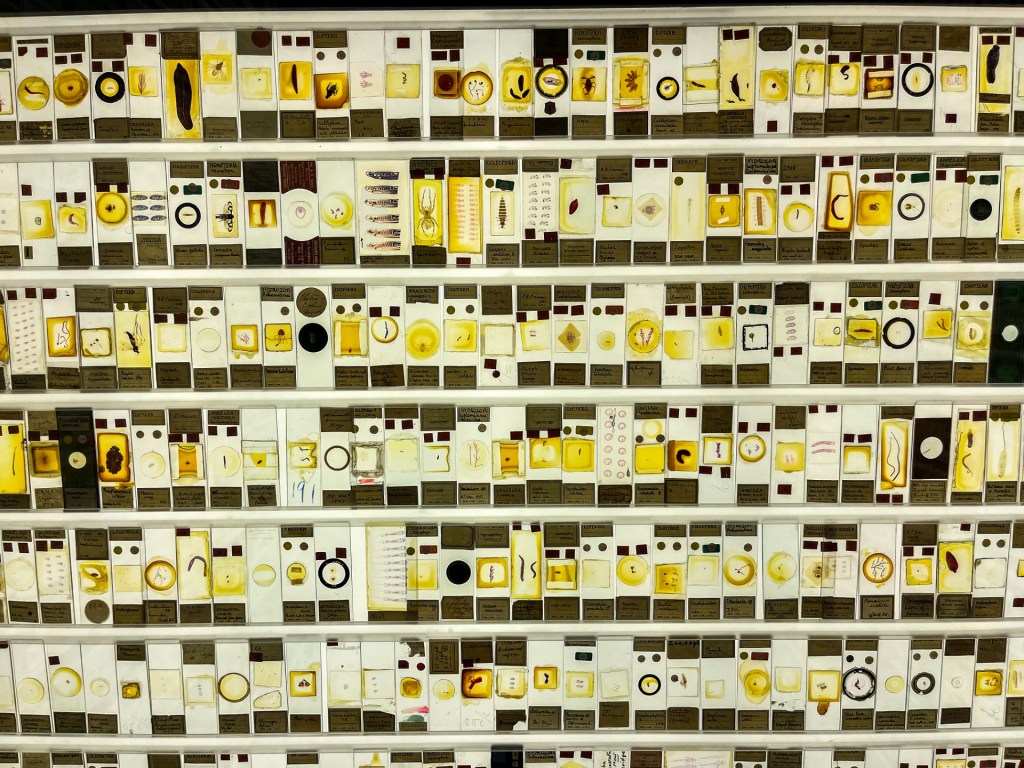
If you’re unperturbed by the title, perhaps you should check out the unrivalled collection of oddities and rare specimens on display at the UCL. Just be prepared for a whole lot of weird – all in the name of science.
This quiet, unassuming museum is one of the most interesting places I’ve visited in London recently. It was like stepping into a witch’s brewhouse, or a set in Jenna Ortega’s Wednesday. I’m almost certain there’s nowhere else in London you’d find an exhibit called The Negus Collection of Bisected Heads – and if you’ve ever been curious about what’s inside a pangolin’s skull, wonder no more.
The somewhat macabre, yet intensely fascinating, collection is certainly not for the faint-hearted. But if you’re looking for a completely unique way to spend a few hours for free in London this weekend, you should plan a visit to the Grant Museum of Zoology.
What is the Grant Museum of Zoology?
Founded in 1828 by Robert Edmond Grant, the Grant Museum of Zoology began as a teaching collection for the study of animals at what is now the University College London. The museum’s founder was renowned for his study of marine invertebrates, and was thought to have influenced a young Charles Darwin during his time at Edinburgh University.
At the time of Grant’s death, there were around 10,000 specimens, all of which he donated to the University. The museum has since had a number of eminent scientists serve as curator, and the collection has grown exponentially: now there are over 68,000 specimens, including some of the rarest (and weirdest) in the world. It’s the last university zoological museum in London, and it’s still in continuous use by students today. During it’s public opening hours, visitors are welcome to explore the incredible exhibits that have been collected here for the last 200 hundred years.

Where is the Grant Museum of Zoology?
The Grant Museum of Zoology can be found at the Rockefeller Building, 21 University Street, London, WC1E 6DE. The museum is in the middle of three nearby tube stations: Goodge Street, Euston Square and Warren Street. It’s around a 5-8 minute walk from any of these.

How much does the Grant Museum of Zoology cost and what are the opening times?
The Grant Museum of Zoology is completely free to visit (although they do gratefully accept donations). The museum is open from 13.00 to 17.00 Tuesdays to Fridays, and 11.00 to 17.00 on Saturdays. It’s closed on Sundays and Mondays. It’s not possible to book in advance, but because it’s a lesser known museum, it usually doesn’t get overly busy, so you’ll be fine to visit at any time.
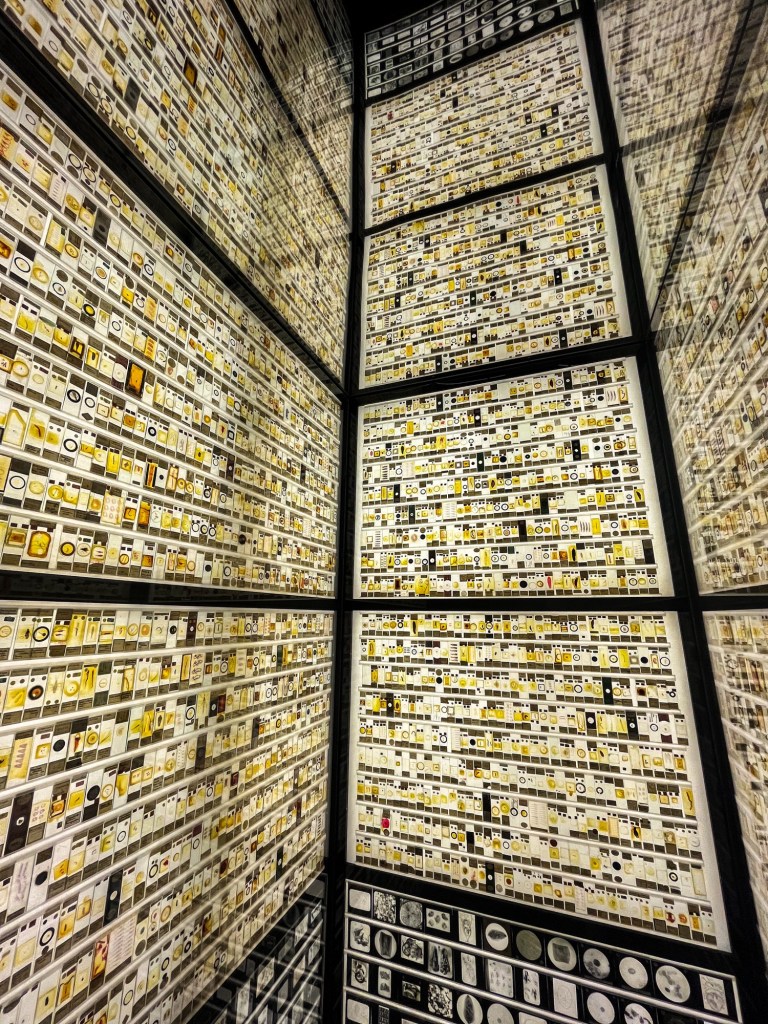
Best things to see at the Grant Museum of Zoology
The Grant Museum of Zoology is home to some incredible, bizarre, and impressively rare specimens. From an entire wall filled with 4,000 mouse skeletons, to a collection of preserved mammal brains, there’s a huge range of interesting items to pore over. There’s so many fascinating specimens to choose from, but I’ve managed to pick out a few of my favourite ones below – keep an eye out for these during your visit!

Extinct species
For me, the skeletons of extinct species always serve as a sobering reminder of the unrepentant ecological destruction we humans seem intent on wreaking . The Grant Museum of Zoology is home to plenty such examples, perhaps none more famous than that peculiar flightless bird from Mauritius, hunted to extinction by sailors in the late 1600s. Here you’ll find two boxes of relatively-complete dodo bones, one of which was rediscovered by complete chance during the museum’s move.
The Grant Museum of Zoology also hosts the rarest skeleton in the world: that of the quagga. The quagga was a type of relatively un-stripey South African zebra that went extinct in the 1800s (our fault again). Remarkably, this skeleton is one of only seven in existence, and well worth visiting.
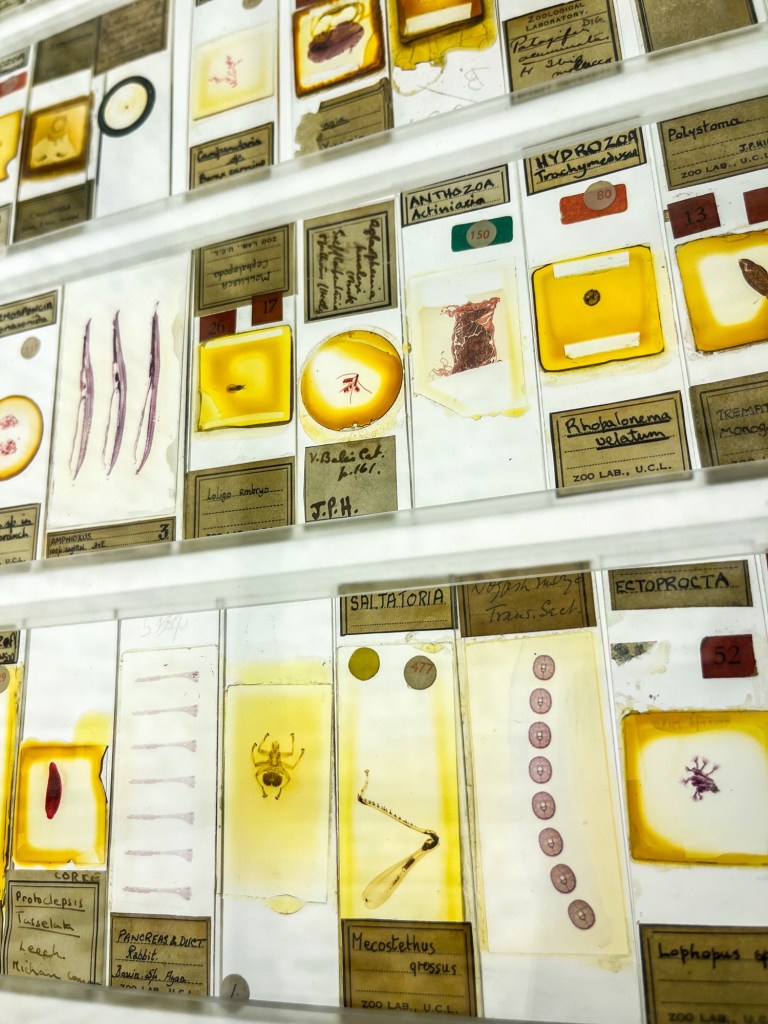
The Micrarium
This is one of the most unique things about the Grant Museum of Zoology. This quirky installation pays homage to the fact that 95% of known animal species are smaller than your thumb. An old storeroom has been backlit and repurposed into a miniature display of over 2,000 lantern slides containing some of our planet’s tiniest specimens, which students can check out like books from a library. These range from rare insect wings, to mammoth hair, to a platypus’ tooth. There’s even complete specimens, such as a whole squid, measuring only 2mm long, and a beetle 1/10th of a mm thick!
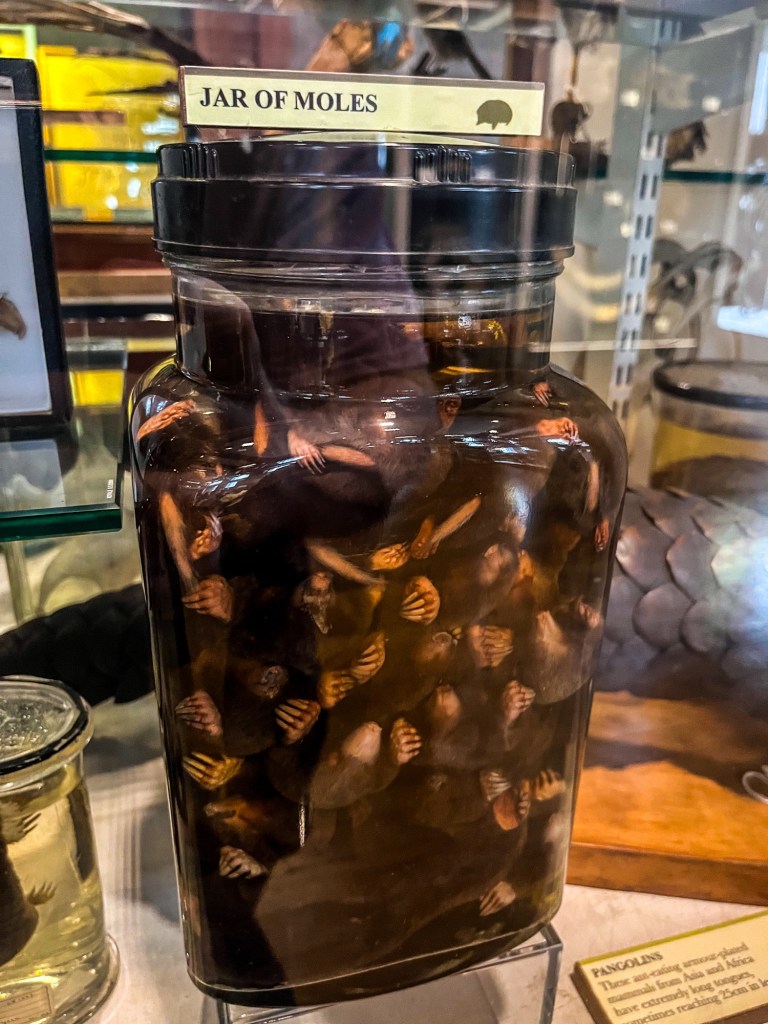
A jar of moles
And of course, somehow the strangest of all: the infamous jar of moles. 18 little guys squeezed into a single jar. The museum suggests that they’re stored like this because back in the day, glass jars and preservation fluid were expensive, so this was the cheapest option. It also made it easier for storage and transportation, and as the museum was once an institution for studying comparative anatomy, they were probably once intended for students of a dissection class. Explanation aside, it’s an incredibly weird thing to see.
If you’re looking for more unique things to do in London, make sure to subscribe to my blog, and follow my socials where I’m posting daily content!
@gossamertraveller





 The Gossamer Traveller