
Budapest is world-famous for its thermal baths and ruin bars. Natural hot springs and quirky bars serving cheap pints – what’s not to love? But this city has so much more to offer.
While the baths and bars are unmissable attractions, there are plenty of other reasons why the Hungarian capital should be at the top of your European bucket list. Between stunning castles, unique memorials, and hidden cave churches, there’s plenty to do before your bar crawl begins. Here are the top ten things to do in Budapest beyond the thermal baths and ruin bars.
A bit about Budapest
But first, a little bit about Budapest.
The modern city was formed in 1873 by the unification of three cities (Buda, Obuda and Pest), but Buda has been the royal seat of power in Hungary since the 14th century, with a succession of palaces built here on Castle Hill (more on that below). In the 19th century, Budapest played a key role in the Hungarian Revolution, a huge uprising seeking independence from the Habsburg dynasty. While the revolution failed, it remains a significant part of Hungarian national identity.
The 20th century was a turbulent time for Budapest, and the darkest period came with the installation of the Arrow Cross Party in the final years of the Second World War. Aligned with the Nazis, their reign of terror saw untold massacres, mass deportations to the camps, and the ghettoisation of Budapest’s remaining Jewish population. Budapest’s liberation by the Soviets was followed by a period of harsh Communist occupation. This was a regime of secret police, abductions, and executions without trial, which wouldn’t be overthrown until the revolutions of 1989. There are many sites throughout the city where you can learn more and pay your respects to those lost (see the Dohany Street Synagogue and the Shoes on the Danube Bank, below).
Since then, the city has rebuilt and reimagined itself, and tourism here has boomed. Travellers have flocked here for the city’s beauty and culture, as well as a fascination with its rich, often dark, history. I have visited this mesmerising city many times, and I’m always finding new reasons to return. Though a tough call, I’ve managed to whittle down my top ten things to do in Budapest, beyond the thermal baths and ruin bars.
Gellert Hill
Let’s start at the top. Literally.
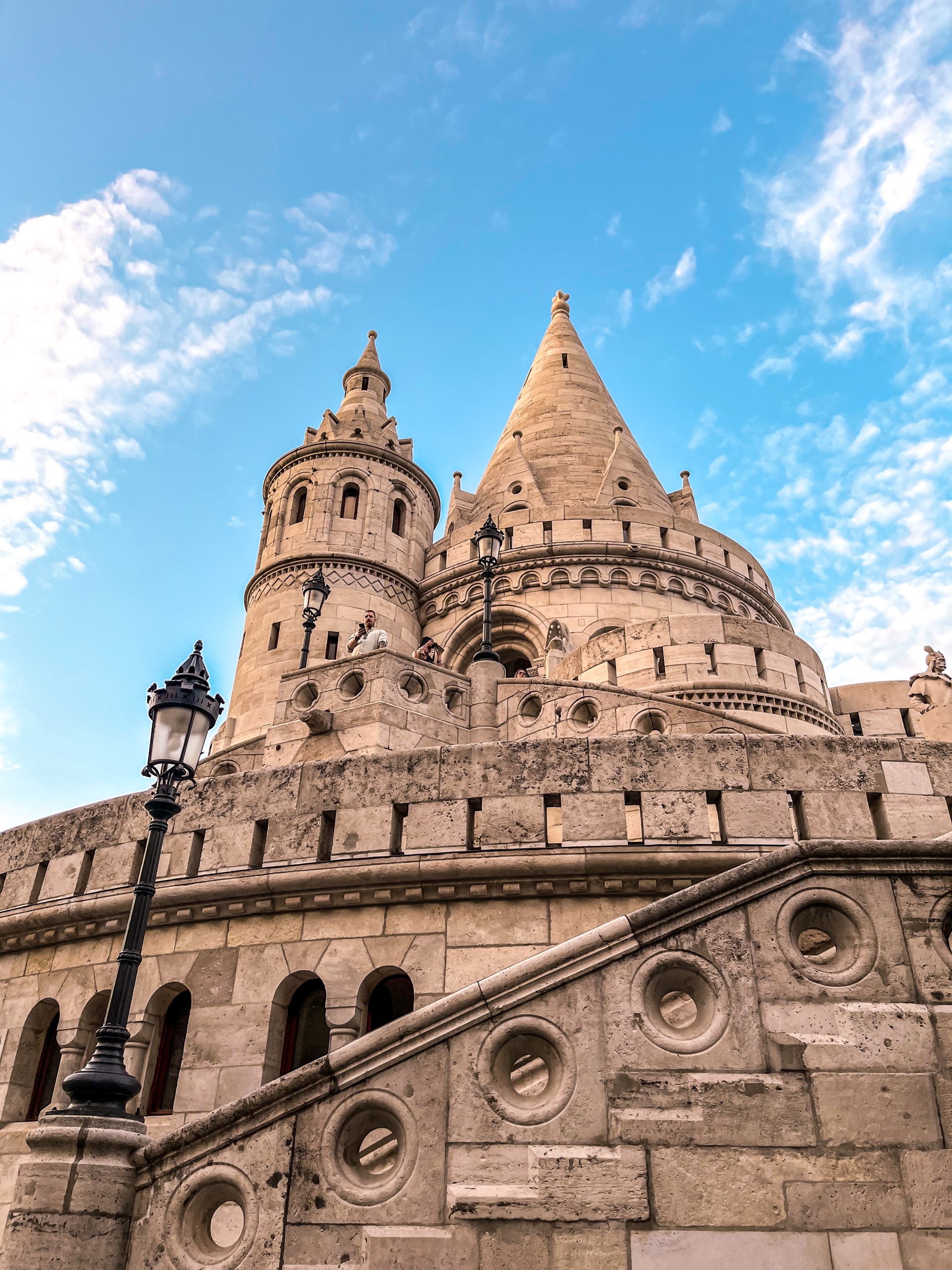
If you’re after the best views of Budapest, look no further than its highest point: Gellert Hill. It sits on the Buda (west) side of the Danube, stretching across the riverbank from Liberty Bridge to the Erzsebet bridge, peaking at over 230m. You can reach the summit in around 20 minutes, though there are plenty of winding trails to keep you occupied.
It’s named after the unfortunate 11th century bishop, St Gellert (Gerard), who tried to convert the Magyars to Christianity. They weren’t exactly keen on the idea – they threw him from this hill during a revolt. If you take the trail through the park closest to the riverbank, you’ll soon come across his giant monument, supposedly where it happened.
Gellert Hill has plenty more to offer than quaint parkland and a tragic backstory. At its summit is the impressive Citadella (an old Habsburg fort) and the towering Liberty Statue. The hill also has its own thermal baths, a waterfall, and a beautiful church hidden inside a cave, which I’d definitely recommend visiting. Click here for my post about Budapest’s cave church!
Dohany Street Synagogue
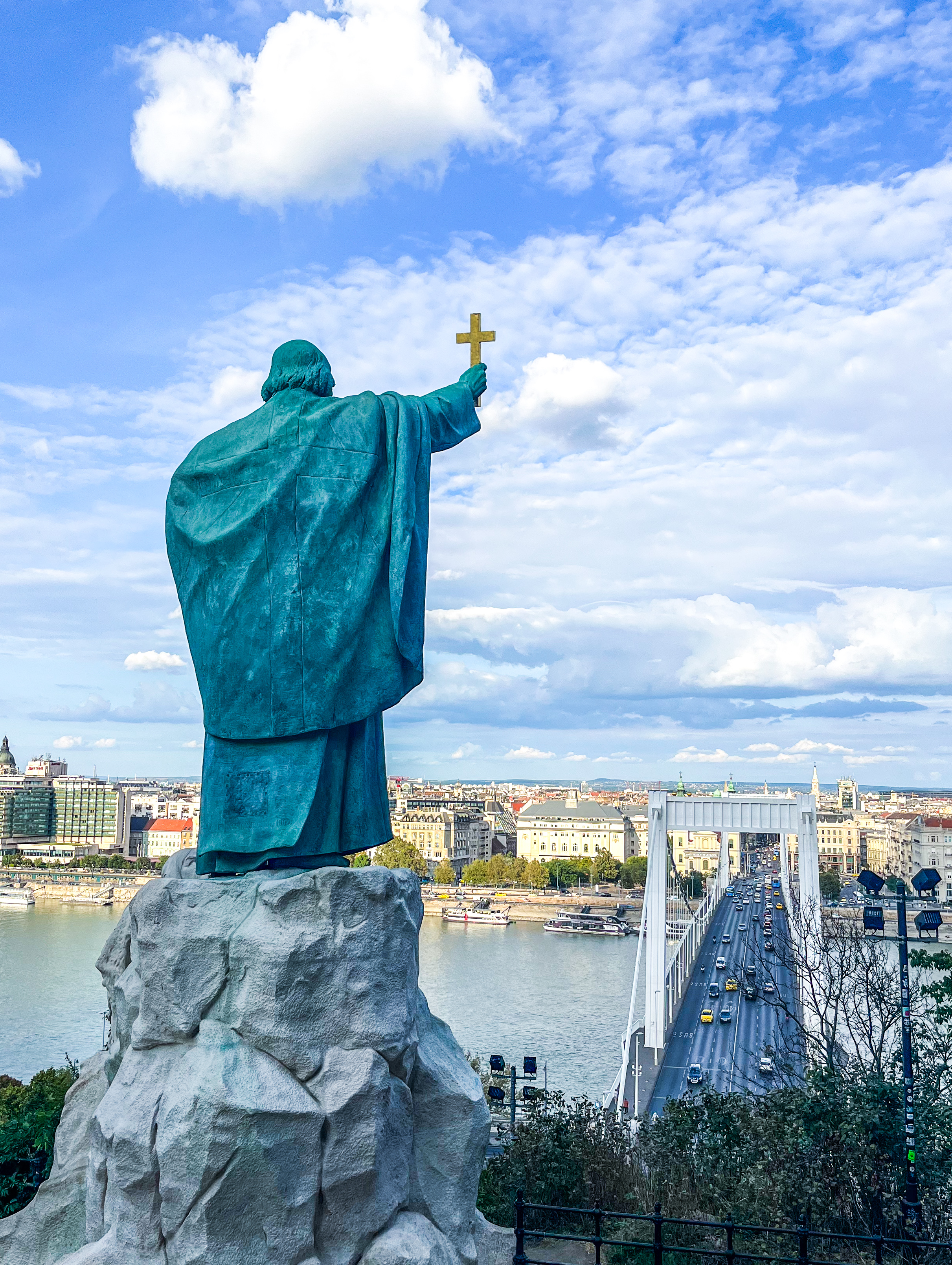
A trip to Budapest wouldn’t be complete without visiting the largest synagogue in Europe, and the second largest globally. Rich with history and steeped in suffering, the Dohany Street Synagogue is a place of poignant beauty, and an important and sobering stop on your tour of the city. While immense and ornate, it also features monuments to the Jewish people who suffered so horrifically during the reign of the Arrow Cross (Hungary’s Nazi-aligned party).
Learn more about the dark history of the city in the museum here, and pay your respects at the Raul Wallenberg Holocaust Memorial Garden. Make sure you don’t miss the Emmanuel Tree of Life – a giant metal sculpture of a willow tree, outside the back of the Dohany Street Synagogue. Pay close attention to the leaves, which have been inscribed with the names of those lost.
How much does it cost to visit the Dohany Street Synagogue? It’s 9,000 HUF (around £20) for an adult, 7,100 HUF (£16) for a student, and 3,300 HUF (£7.50) for children aged 6-12. Tickets can be bought on site (beware of long queues) or online. There is a modest dress code that is strictly enforced (no sleeveless tops, short skirts, or above-the-knee shorts), and men will be provided a kippah (skullcap) to wear when inside.
Budapest’s Great Market Hall
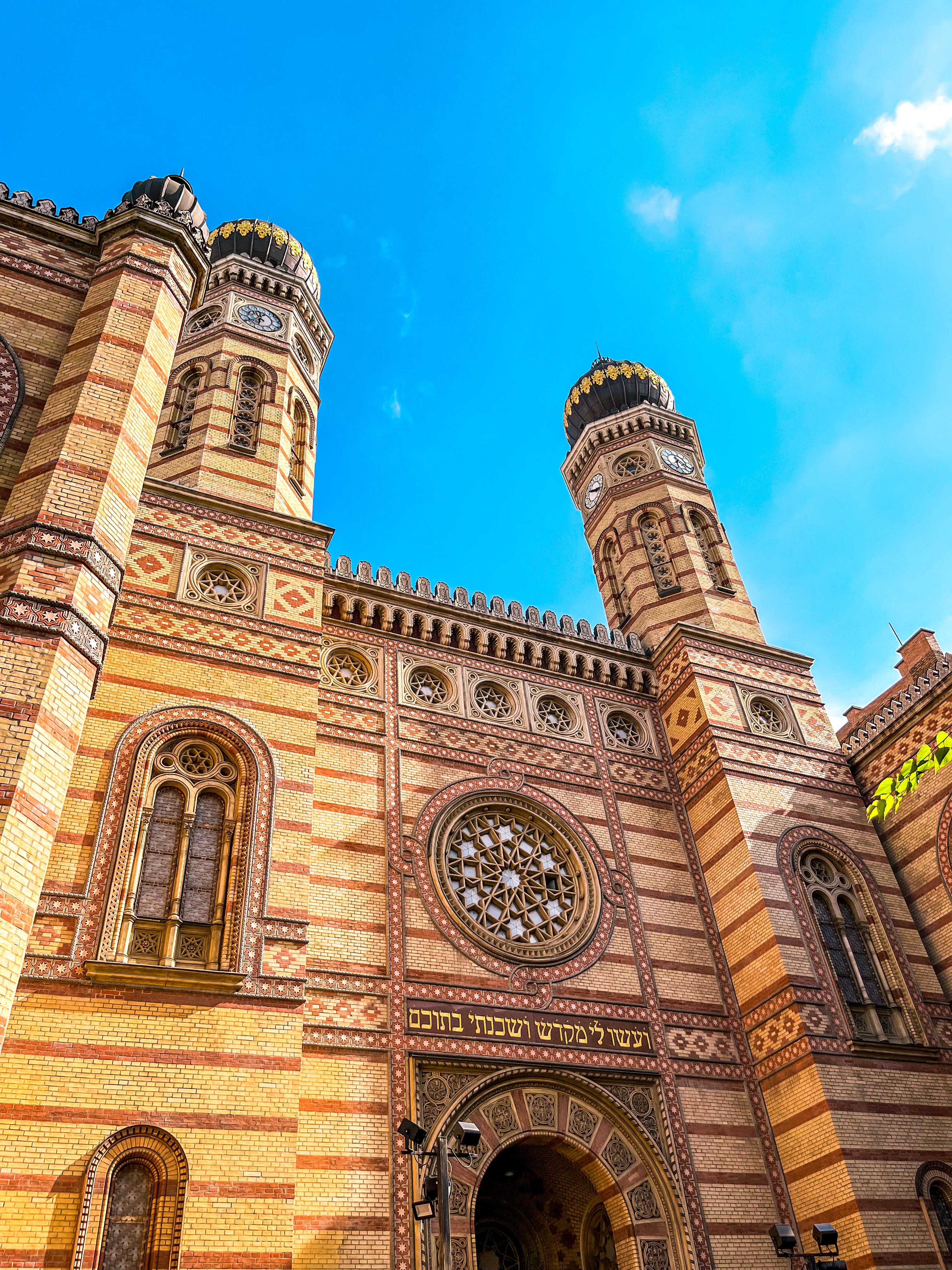
If you’re in the mood for some shopping or looking to sample some local delicacies, the Great Market Hall is the place to be. Also known as the Central Market Hall, this vast indoor market is home to over a hundred stalls spread over three floors.
Take a wander through a vast collection of vendors selling everything from pickled melon and kolbasz sausage, local Tokaji wine and palinka (the national spirit), to Hungarian dolls and traditional dresses. Paprika has a historical popularity in Hungary, and nowhere is this more apparent than in the Great Market Hall. You’ll see the vibrant red spice absolutely everywhere. Whatever you’re after, you’ll find it here at Budapest’s Great Market Hall.
What to eat at the Great Market Hall? While the cooked food in the Great Market Hall is catered to tourists (and priced accordingly), it’s still worth checking out the street food stalls on the first floor. Try the traditional langos – a fried flatbread topped with garlic and sour cream, and whichever vegetables, cheeses and cold meats take your fancy. Or, if you’ve got a sweet tooth, grab a Retes (strudel) from the middle aisle of the ground floor. The strudels have a range of fillings, such as cherry, curd or walnut, as well as more experimental flavours for those with a more adventurous palate.
Buda Castle
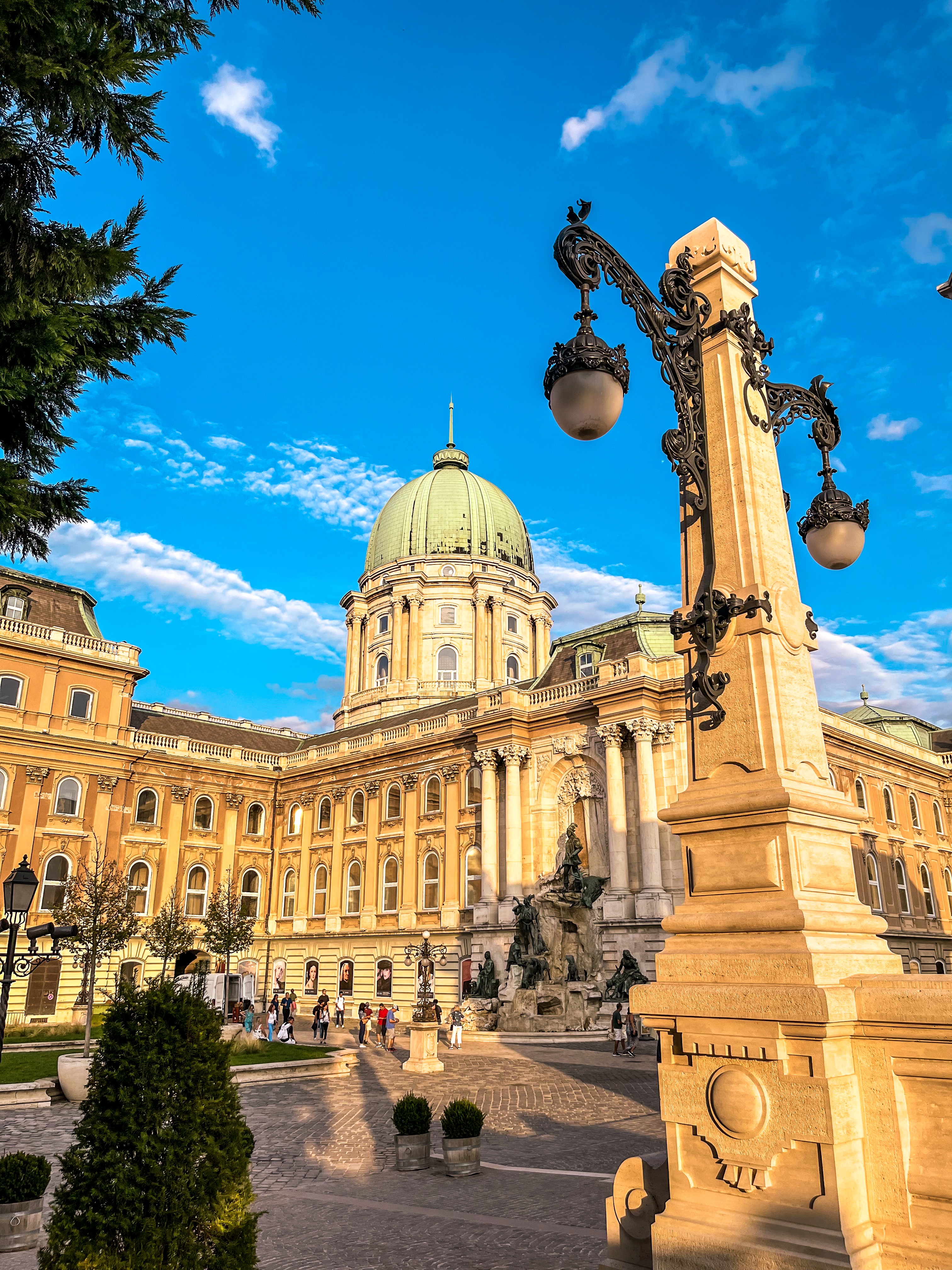
Buda Castle is the grand centrepiece of the historic Castle District, sat atop Castle Hill, once the palace complex of the Hungarian kings of old.
Beyond impressive views of the Danube, you’ll also find museums, restaurants, castle gardens and more. Sadly, the palace interior was heavily looted at the end of the war, leaving it little more than a shell, but these impressive buildings have since found a new purpose: housing the Hungarian National Gallery, the Budapest History Museum, and the National Szechenyi Library.
Even if you skip the museums and galleries, there’s plenty to do at Buda Castle. The Castle District is overflowing with stunning architecture and charming cobbled streets, peppered with quaint restaurants and cafes. It’s home to the Matthias Church, which has a long and rich history of Hungarian coronations, as well as the famous Fisherman’s Bastion (more on that below). You can visit the Mary Magdalene Tower, the Castle Gardens, as well as the Hungarian president’s residence (Sandor Palace), where you’ll be able to watch the changing of the guards every hour from 9am – 5pm.
The Buda Castle District even has its own labyrinth of caves, cellars, and tunnels, which can be explored, including the famous Hospital in the Rock, with its incredible wartime history. And if you don’t fancy the climb up Castle Hill, try the Buda Castle Funicular: a historic cable car that’ll take you up and down the hill for a small fee (1700 HUF/£3.70 return), running every ten minutes.
Fisherman’s Bastion
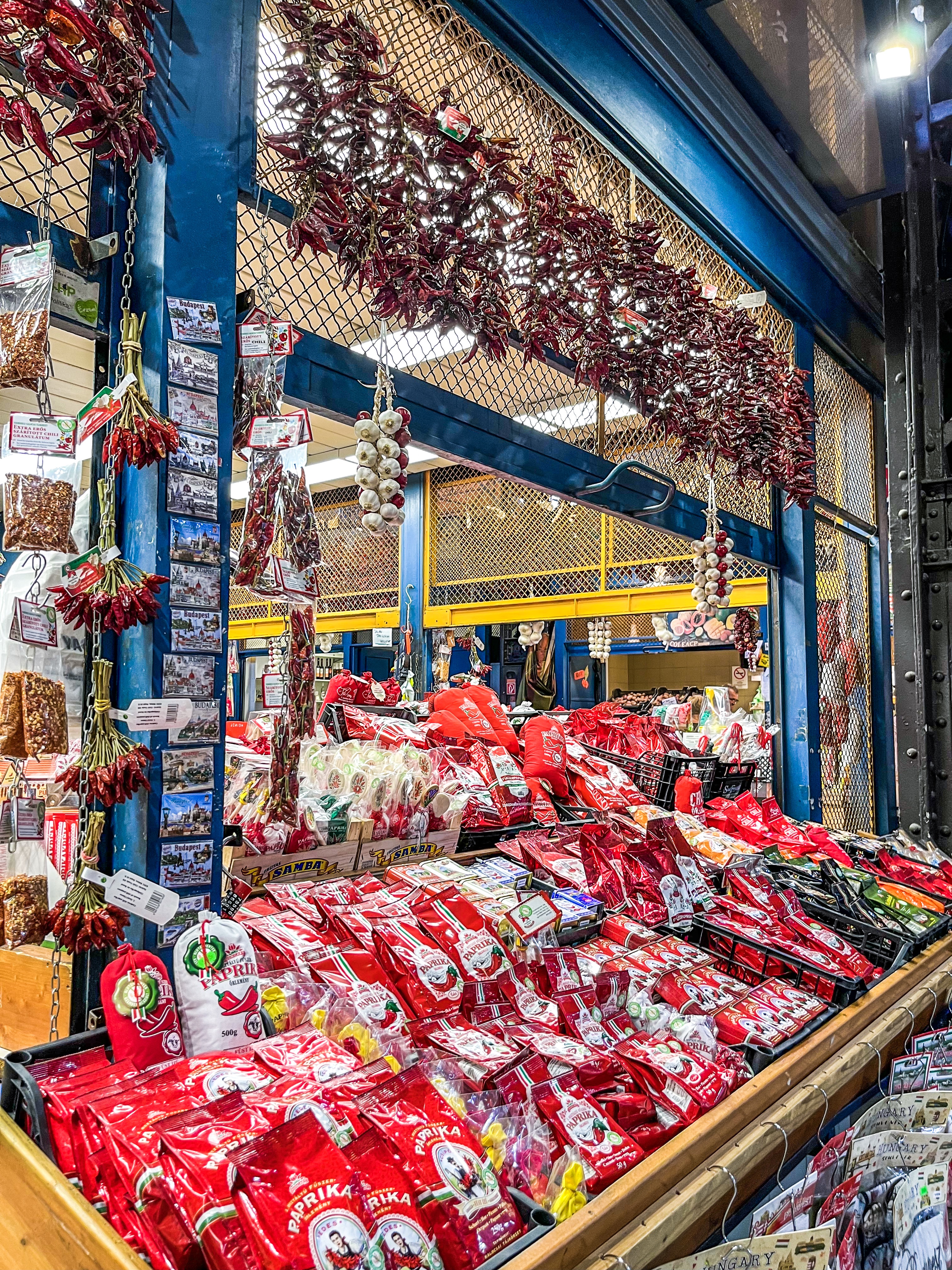
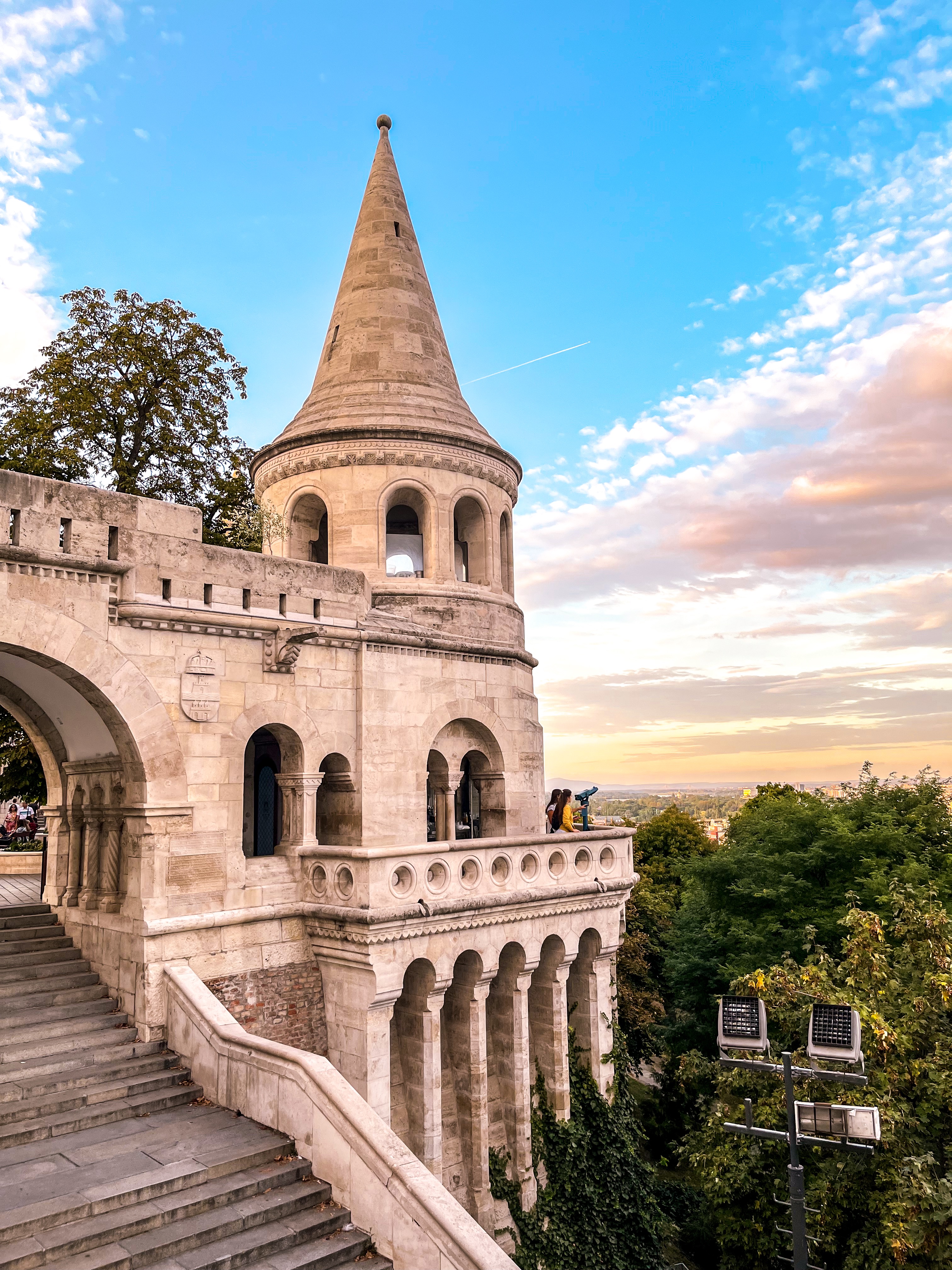
The Fisherman’s Bastion is iconic. If you only have time to visit one place during your stay, this is it.
Built atop the old walls of Buda Castle (its next-door neighbour) at the end of the 19th century, the Fisherman’s Bastion is 140m of uniquely ornate parapets, peering over the old town of Buda. It’s punctuated with seven impressive towers, which represent the seven chieftains of the Magyars – the original tribes of Hungary.
The Fisherman’s Bastion also offers stunning views over the city of Budapest. It overlooks the Danube and the Pest (East) side of the city, and it is directly opposite the magnificent Hungarian Parliament building. Make sure you visit at sunset to catch the last of the golden light glinting off the towers.
How much does the Fisherman’s Bastion cost? The Fisherman’s Bastion is free to visit and fully accessible year-round at any time. The upper terrace of the Fisherman’s Bastion costs 1200 HUF (around £2.70), but it’s not necessary to visit this part. The most iconic sections and views can all be seen with no charge. There’s also a cafe/bar and restaurant inside part of the fortifications, with views out across the Danube, however they’re usually very busy due to the stunning scenery.
Margaret Island
Did you know Budapest has its own island?
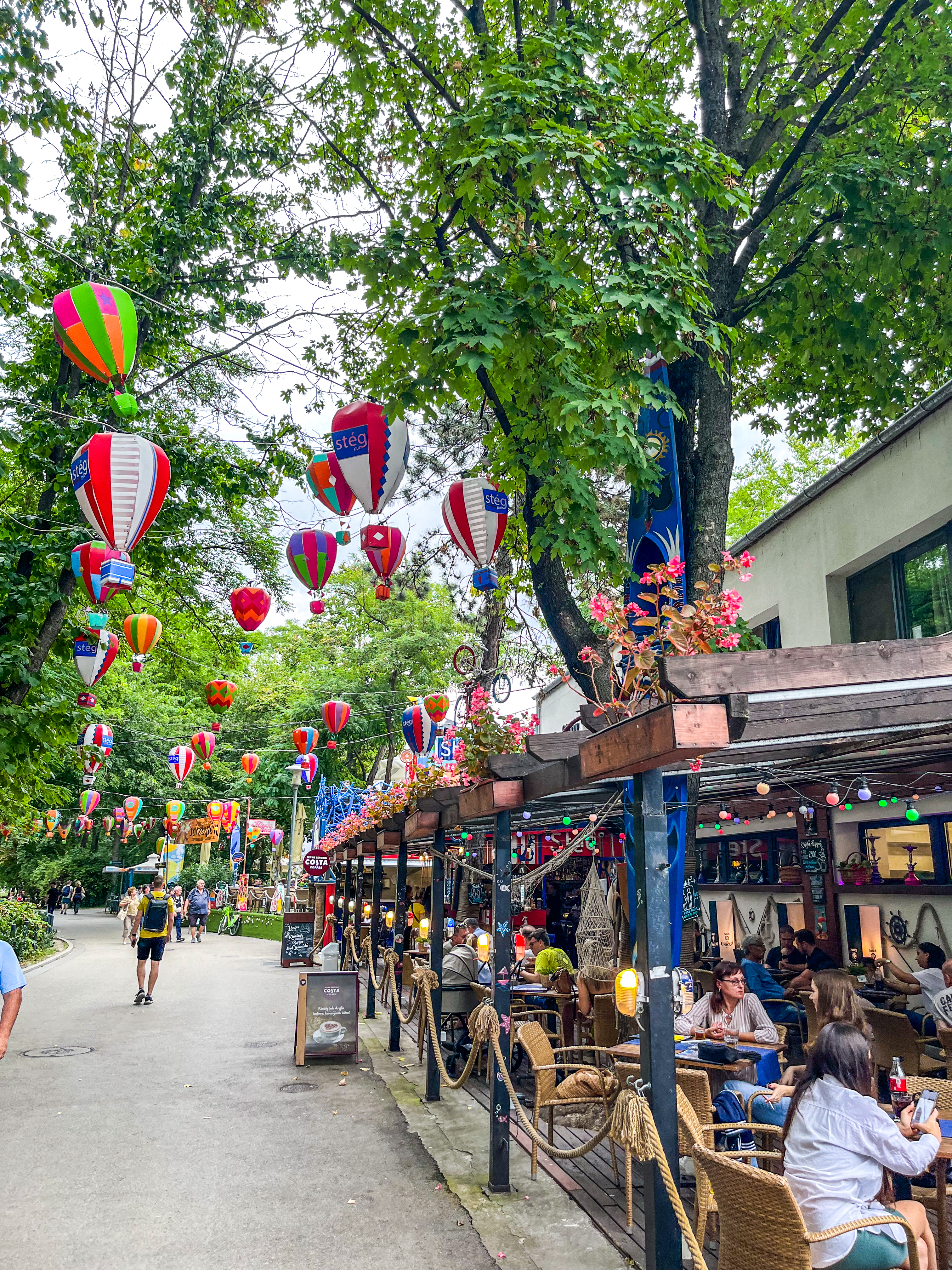
Margaret Island may only be a 225 acre stretch of greenery (walkable in about 45 minutes), but it’s packed with things to do and see, making it a firm favourite for travellers. During the day, take a stroll through the tranquil parkland, making sure to explore the Rose Garden, the Japanese Garden, and the old Franciscan and Dominican ruins. The island even has its own outdoor cinema, as well as its own thermal baths, Palatinus Baths, which are more akin to a waterpark than a traditional thermal spa.
Margaret Island is a great place to visit in the evening, especially during the warmer months. It’s famous for its musical fountain. While there are some daytime shows, the best time to enjoy this is at night. It’s a spectacle of light, dancing water, and music – everything from classical to rock to George Ezra’s “Budapest” (of course).
Once you’ve finished the show, head down to one of the restaurants or bars for some refreshments. For a relaxed bar with a good atmosphere and great food, I would recommend paying a visit to Hippie Island or Wonder Island.
How do you get to Margaret Island in Budapest? Despite being an island, you won’t need a boat. It can be reached on foot via Margaret Bridge, and there are trams and buses that will take you here too.
St Stephen’s Basilica
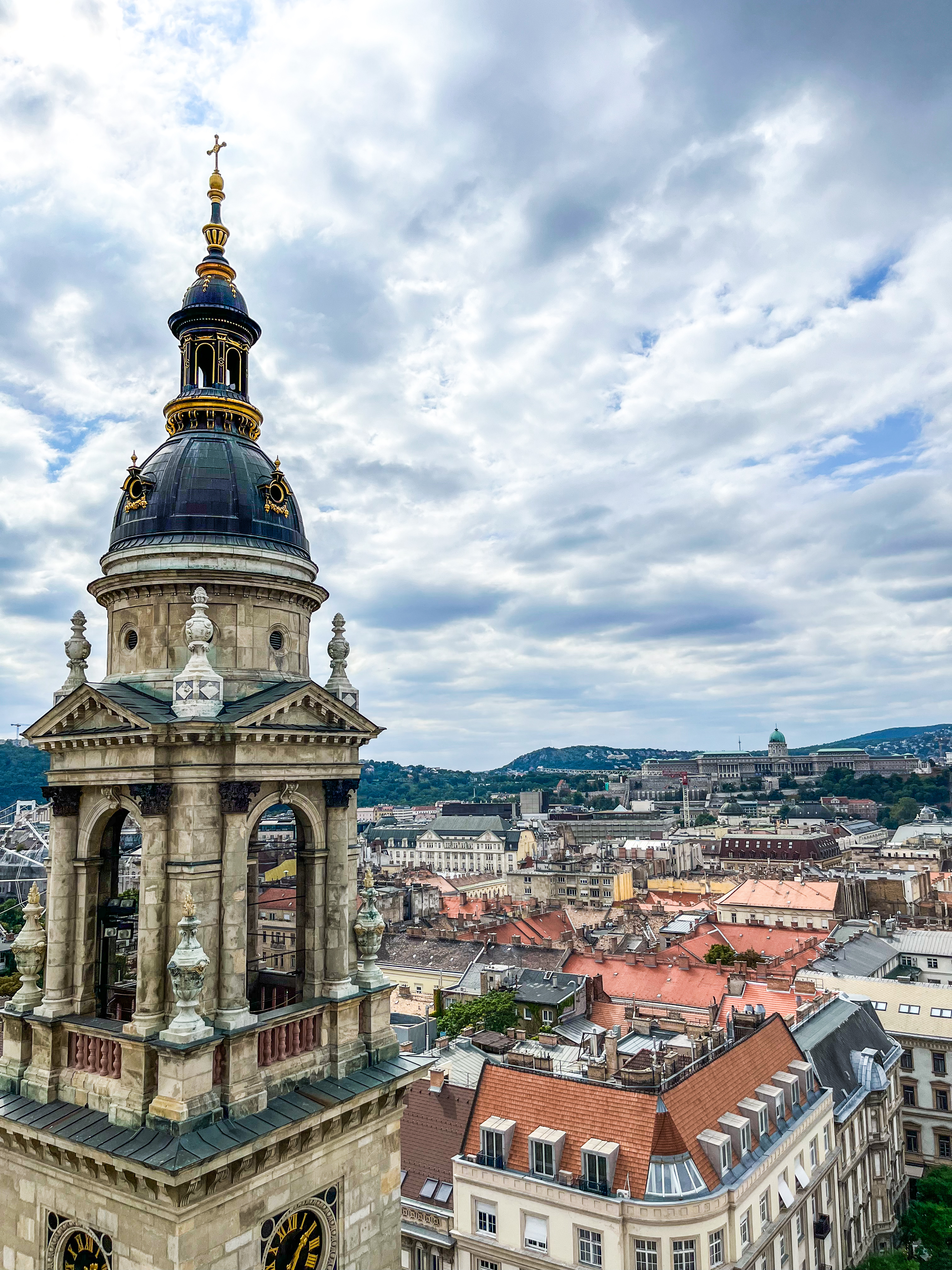
How often do you find a place where you can get incredible panoramic views of a city and see the mummified hand of its patron saint? St Stephen’s Basilica might just be unique in that respect.
The towering Roman Catholic holy building has survived partial collapse, heavy bombing, and widespread fire, to remain one of Budapest’s most iconic buildings. It was named after St Stephen, the first king of Hungary, who is credited as the founder of the Hungarian state in 1000 AD. There is a panoramic terrace viewpoint accessed via 356 steps (or elevator), surrounding the tall dome at the top of the church. It’s certainly worth the climb – this viewpoint offers some of the best views of Budapest.
The interior is stunningly ornate, and it boasts the mummified right hand of St Stephen, founder of Hungary. Believed to have miraculous powers, the Holy Right has a storied past: it was stolen and recovered, paraded through distant cities like Dubrovnik and Vienna, and hidden from the Nazis, before being returned to St Stephen’s Basilica for public viewing.
How much does St Stephen’s Basilica cost? There are three tiers of adult ticket allowing entry to different parts of the basilica, however I would recommend getting Option 3 for 4,500 HUF (£10), as this grants you access to the viewpoint, the treasury, and the church.
Shoes on the Danube Bank
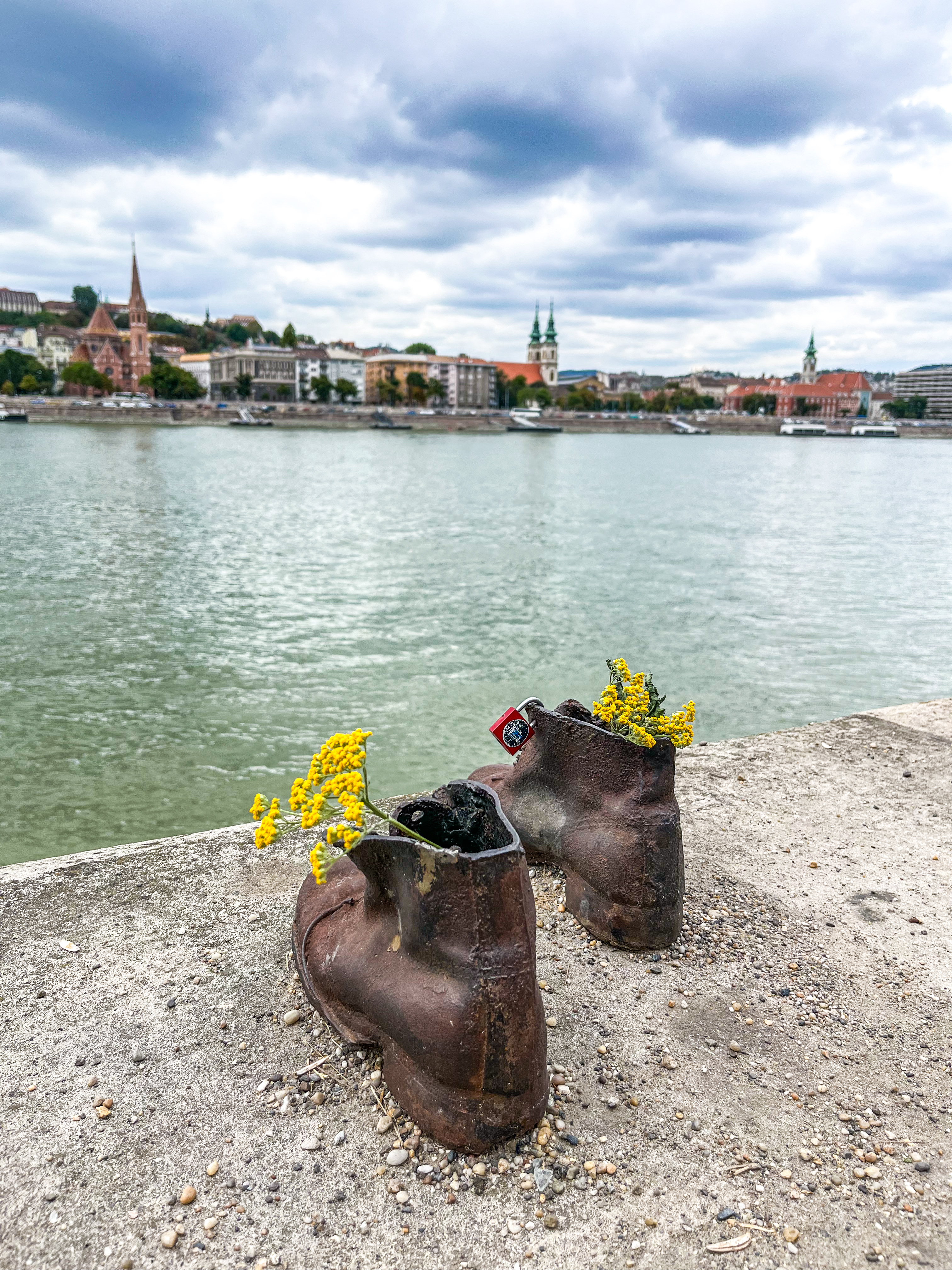
The Shoes on the Danube Bank is one of Europe’s most poignant and sobering memorials to the atrocities committed by far-right ultranationalists during the Second World War.
If you’re walking along the Pest (East) bank of the Danube, towards the Parliament Building, you’ll see dozens of bronze shoes seemingly left abandoned by the waterside. There are shoes of all shapes and styles and sizes, each pair facing towards the river.
What do the Shoes on the Danube mean? Created in 2005, the Shoes are a memorial to the thousands of citizens – many of them Jewish – murdered here by the Arrow Cross Party. The Arrow Cross, who took control of Hungary from 1944-45, ordered these citizens to remove their shoes and line up along the banks of the Danube. The shoes were stolen by the militia to resell, and the citizens were shot into the river. This is one of the most powerful memorials I’ve come across on my travels, and, when visiting, it deserves a moment of quiet reflection.
Heroes’ Square and City Park
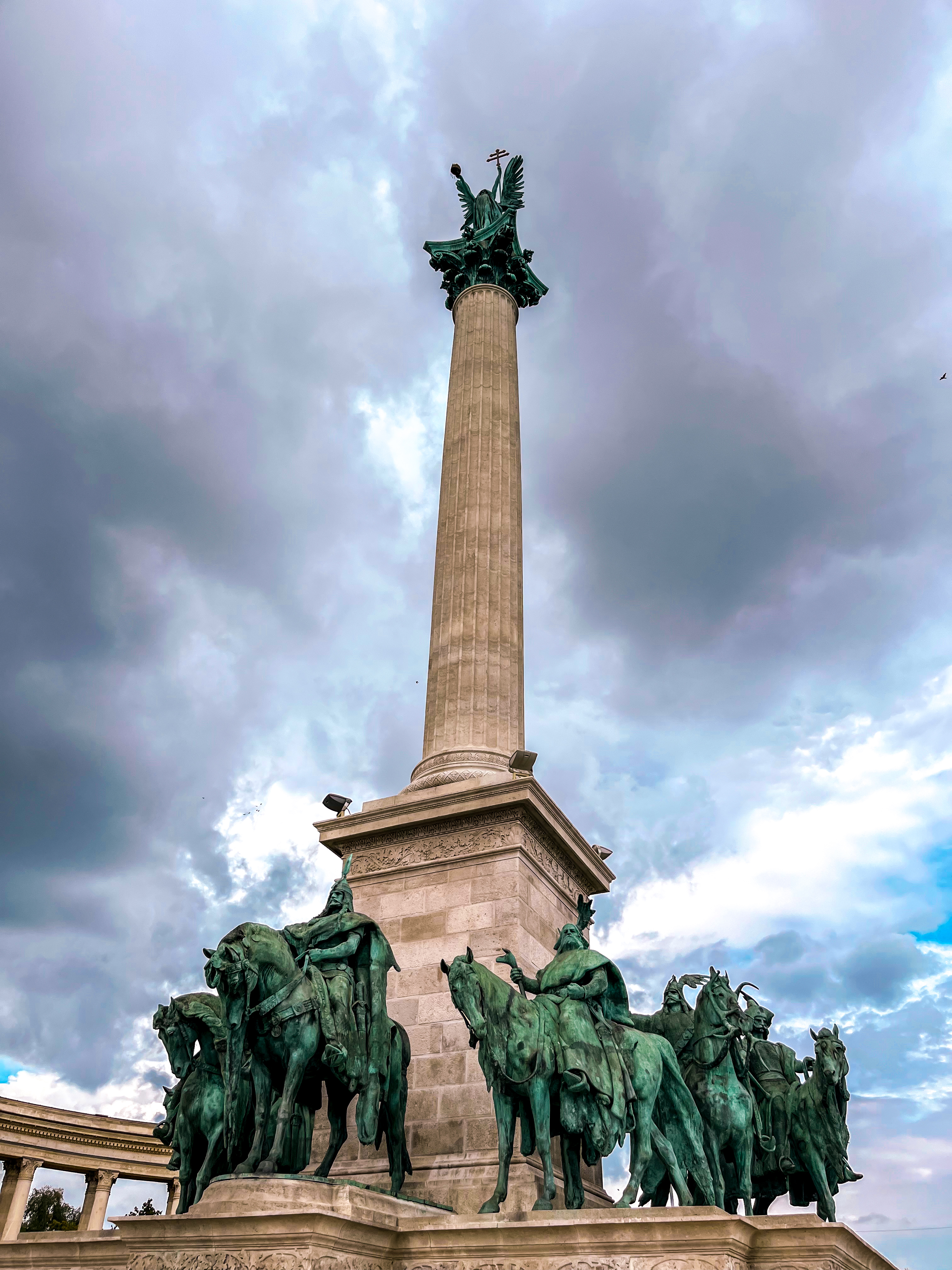
Heroes’ Square, the majestic gateway to City Park, is a vast open square populated by the Millennium Monument – towering statues of influential figures from Hungary’s past. In its centre is an ornate column, topped with the archangel Gabriel, beneath which the seven Magyar chieftains sit on horseback. Behind the column are two curved rows, or arcades, filled with giant statues of famous Hungarians, such as St Stephen, Louis I, and Matthias Corvinus. It’s the sheer scale of this UNESCO World Heritage Site that makes it so impressive. The square is also overlooked by the Hungarian Museum of Fine Arts, if you fancy a glance at some impressive brushwork.
Beyond the Square is City Park, which is filled with many things to do besides strolling through the beautiful gardens. It’s home to the most famous thermal baths in Budapest, Szechenyi Thermal Baths, as well as the Capital Circus of Budapest, and even a zoo. The Varosliget Lake is a popular boating spot during the warmer months, with the stunning Vajdahunyad Castle as a backdrop. In the winter months, this area hosts a giant open-air ice rink, which is one of the oldest and largest in Europe.
Hungarian Parliament Building
Last, but certainly not least: the magnificent Hungarian Parliament Building.
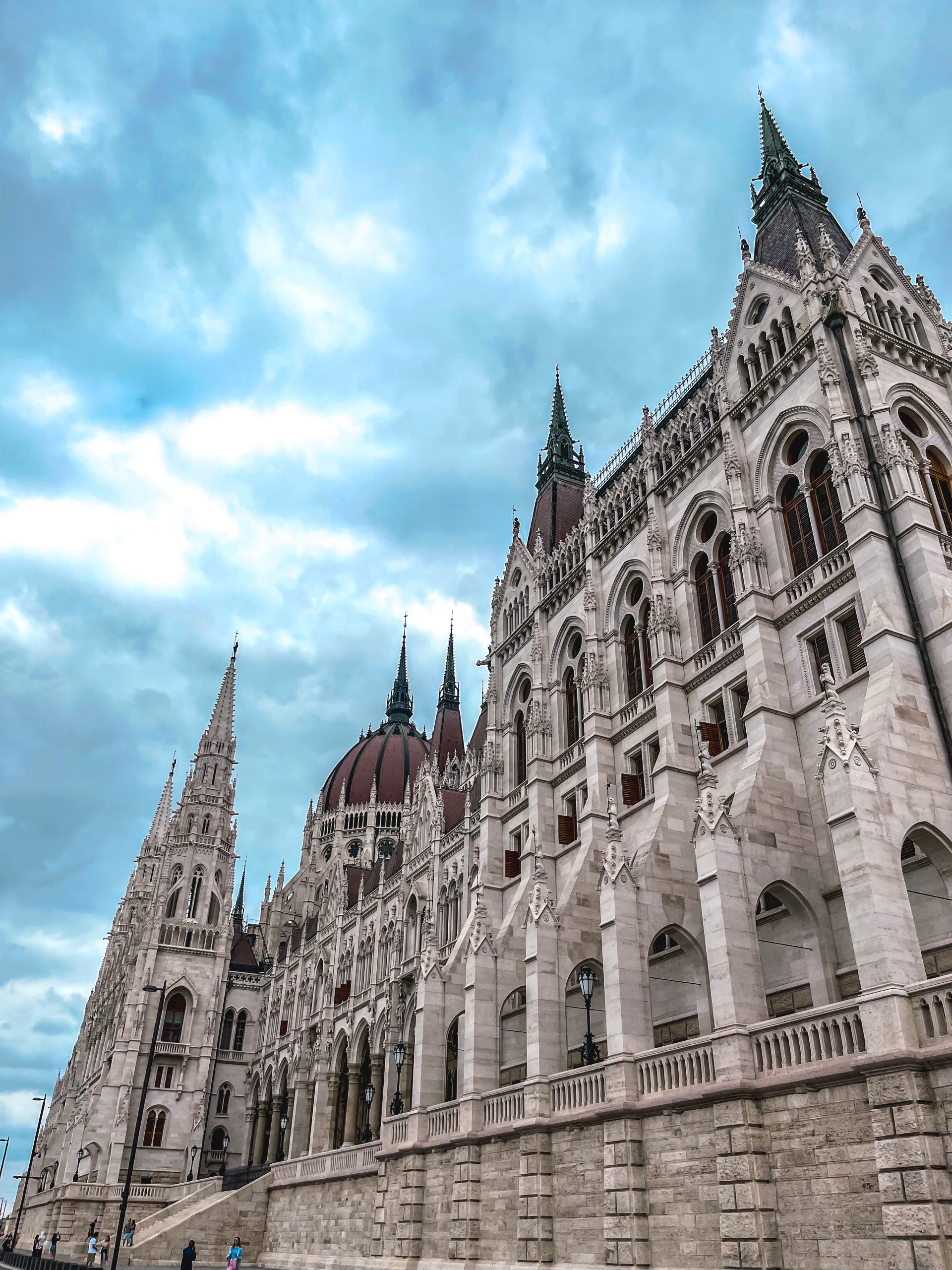
It’s a building of spectacular scale and beauty: one of the greatest examples of Gothic and Renaissance Revival architecture in the world, and one of the largest parliamentary buildings too. It’s a cruel irony that the architect, Imre Steindl, went blind before its completion.
If you decide to go inside, you’ll see the Holy Crown of Hungary: the Crown of St Stephen, founder of the Hungarian State. Over 50 kings have been coronated with this crown, and it is kept under constant guard. There’s also a library that boasts over 600,000 volumes. The interior is incredibly ornate, however it can only be accessed via guided tour, which costs 12,000 HUF (£26) for non-EEA citizens (Brits, that’s you).
The exterior is the main attraction, anyway. Don’t miss seeing it at night when it’s all lit up, especially from across the Danube at the Buda Castle District. This is one of the most impressive sights in all of Budapest.


 The Gossamer Traveller